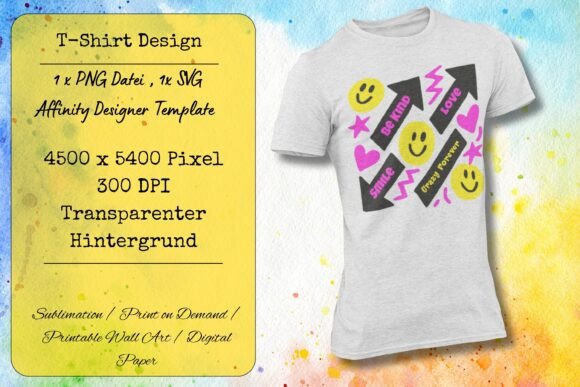
Emoji Doodle 1: A Designer's Take on Smiley Arrow Embroidery
As someone who spends most of their day staring at digitized files and thread charts, I approach new design assets with a healthy dose of skepticism. We see thousands of graphics floating around the internet, but not all of them translate well from a screen to a stitched finished product. That is why I took a close look at Emoji Doodle 1, part of the "Smiley Arrows" set. On the surface, it looks like a fun piece of digital art, but my job is to determine if it holds up as a viable machine embroidery design for real-world applications.
The first impression of Emoji Doodle 1 is undeniably cheerful. The combination of hand-drawn style smileys and bold arrows creates a mood that is playful yet directional. For an Etsy seller or a boutique owner, this visual personality is gold. It speaks directly to a younger demographic or anyone looking to add a touch of whimsy to their wardrobe. However, when we move from the concept of T-Shirt Designs to the reality of needle and thread, the conversation changes. We have to talk about stitch types, fabric tension, and how those cute curves actually lay down on cotton or polyester blends.
Putting the Design to the Test: A Real-World Scenario
To truly evaluate this graphic, I imagined a specific project: a custom order for a local daycare needing branded tote bags for their end-of-year gifts. They wanted something bright, recognizable, and durable enough to survive being stuffed with crayons and snacks. Emoji Doodle 1 seemed like a perfect candidate for this tote bag design project. The arrow element offers a great opportunity to guide the eye across the bag's surface, while the smiley face adds that necessary emotional connection.
In this scenario, the design would likely be executed as a fill stitch for the main bodies of the emojis and arrows, perhaps accented with a satin stitch border to define the edges against the canvas fabric. The "doodle" aesthetic suggests a slightly looser, more organic feel, which can be forgiving in embroidery. Unlike rigid geometric logos, a hand-drawn style allows for minor shifts in registration without ruining the overall look. This makes it an excellent choice for small shop products where you might be running batches on different machines or with different operators.
Versatility Across Custom Apparel and Home Goods
Beyond tote bags, the potential applications for Emoji Doodle 1 are vast. I can easily see this working as sweatshirt embroidery on the chest or sleeve. The bold lines of the arrows would pop beautifully against the textured surface of fleece or French terry cloth. For baby embroidery, this design is a winner because it avoids tiny, intricate details that might irritate sensitive skin or unravel after a few washes. The shapes are substantial enough to remain clear even when scaled down for a onesie or a bib.
For those running a craft business focused on home decor, this graphic could translate wonderfully into an embroidered patch. Patches are a huge trend right now, and the self-contained nature of the emoji and arrow motif fits the circular or oval hoop constraints perfectly. You could also apply this to kitchen towels or pillow covers for holiday embroidery projects, adding a splash of color to neutral linens. The key here is the versatility of the theme; it isn't tied to a specific season, making it a year-round asset for your inventory.
Technical Considerations and Fabric Challenges
While the aesthetic is strong, a professional reviewer must address the technical hurdles. When working with Graphics that feature curved lines and varied thicknesses, stitch density becomes critical. If the original file was created primarily as a vector for printing, it requires careful digitizing before it becomes a usable embroidery file. You need to ensure that the transition between the smiley face and the arrow doesn't create excessive jump stitches or bulky build-up.
Caution is advised when using this design on stretchy fabrics or dark materials. On a black hoodie, for instance, the thread colors need to have high contrast to maintain the "doodle" vibe. If the colors are too muted, the design will get lost. Furthermore, on curved surfaces like caps, the straight sections of the arrow might distort if the hoop size isn't managed correctly or if the stabilizer isn't robust enough. I always recommend testing the design on scrap fabric that matches your final material. This is non-negotiable for maintaining brand consistency and customer trust.
Another factor to consider is the washing durability of the finished product. Dense areas of stitching can cause puckering over time if the underlying fabric is thin. For items like tea towels or frequent-wear t-shirts, you might need to adjust the underlay or use a cut-away stabilizer instead of tear-away to ensure the design stays crisp after dozens of laundry cycles. If you are selling these as personalized gifts, the longevity of the stitch work directly impacts your reputation.
Maximizing Visual Appeal and Commercial Value
The true value of Emoji Doodle 1 lies in its ability to enhance the perceived value of a simple item. A plain white t-shirt becomes a statement piece; a generic apron becomes a chef's favorite tool. For commercial embroidery projects, this kind of visual appeal drives buyer engagement. Customers are drawn to designs that feel human and approachable, and the doodle style hits that mark perfectly.
However, before listing this as a printable mockup or a ready-to-stitch item, you must verify the licensing terms. Just because a file is available as a PNG or SVG doesn't automatically grant commercial rights for physical goods or digital resale. Always check the specific license associated with the "Smiley Arrows" set. Additionally, confirm the available formats. If you are using a specific brand of embroidery machine, ensure the file type is compatible or that you have the software to convert it without losing detail.
In conclusion, Emoji Doodle 1 is a promising asset for designers who understand how to bridge the gap between digital graphics and textile art. It offers a fresh, energetic look that fits well within current trends for custom apparel and handmade goods. By paying attention to thread selection, stabilizer choice, and fabric compatibility, you can turn this cute graphic into a high-quality product that customers love. Whether you are stocking an online store or creating one-off gifts, this design has the potential to be a staple in your creative toolkit, provided you respect the technical limits of the embroidery process.