Review: One Loved Grandma T-Shirt Design for Embroidery
As a designer who spends more time staring at stitch previews than actual fabric, I approach every new digital embroidery file with a mix of optimism and skepticism. When I first pulled up the One Loved Grandma T-Shirt Design, my initial reaction was grounded in its intended purpose: it is a statement piece meant to celebrate family bonds. However, translating a graphic intended for print into a tangible machine embroidery design requires a different eye. This isn't just about slapping an image onto a hoop; it is about understanding how thread interacts with texture, how density affects drape, and whether the final finished product will hold up to the love—and washing—it is sure to receive.
First Impressions and Visual Personality
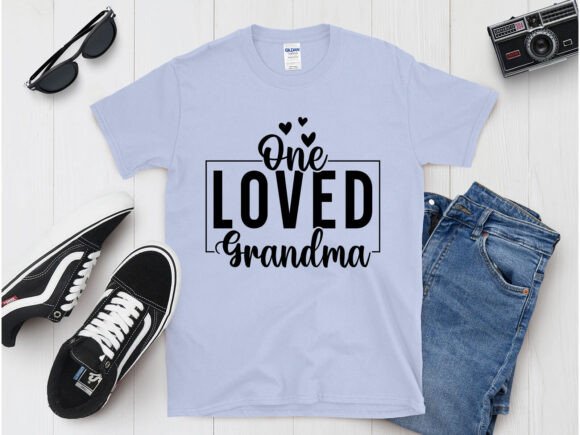
The mood of this design is warm, celebratory, and undeniably personal. Visually, it leans into the classic typography-heavy style that dominates the current market for T-Shirt Designs and Graphics. The layout appears balanced, likely centering the phrase "One Loved Grandma" as the hero element. In a print context, this is straightforward. In embroidery, however, the devil is in the details. The visual personality suggests a design that works best when executed with clean, bold lines rather than overly intricate shading.
For an Etsy seller or craft business owner, the appeal here is immediate. It taps directly into the gifting economy. Grandparents are perennial favorites for personalized items, and this specific phrasing offers a unique twist on the standard "Best Grandma" tropes. The design feels versatile enough to sit comfortably on a boutique tote bag design or a cozy sweatshirt embroidery project without looking out of place. It exudes a handmade charm that machine precision can enhance, provided the digitizing matches the artistic intent.
Real-World Application: The Custom Tote Scenario
To truly evaluate this asset, I imagined a specific real-life scenario: a customer order for a set of matching canvas tote bags for a family reunion. The client wants something durable but stylish. This is where the One Loved Grandma T-Shirt Design faces its first test. Canvas is a sturdy fabric, but it has a distinct weave. If the design relies heavily on tiny text or extremely fine running stitch details, those elements might get lost in the fabric texture.
In this hypothetical project, the design would shine if executed with a combination of fill stitch for the main lettering and perhaps a satin stitch border to make the text pop against the natural canvas color. The result would be a high-value handmade product that feels substantial. Customers reacting to this would likely appreciate the tactile quality of the threads compared to a flat vinyl transfer. It elevates a simple bag into a keepsake. However, if the original graphic includes complex gradients or shadows, those would need to be simplified into distinct thread colors to maintain clarity. A cluttered look on a tote bag can cheapen the perceived value, so restraint in color selection is key.
Navigating Fabric Challenges and Stitch Density
While the design concept is strong, practical execution demands caution regarding fabric choice. Not all substrates are created equal. If you plan to use this on a stretchy knit for a custom apparel line, stitch density becomes a critical factor. Heavy density on a thin t-shirt can cause puckering, making the garment uncomfortable and the design look distorted after the first wash. For baby embroidery projects, such as a onesie or a soft blanket, the backing must be soft, and the stitch count should be minimized to prevent irritation against sensitive skin.
Curved surfaces present another hurdle. Applying this to a cap or a structured hat requires careful hooping and potentially a different digitizing approach than a flat pillow cover or tea towel. The curvature of a cap can compress the design, making tight lettering illegible. If the "One Loved Grandma" text is arched or circular in the source file, extra care must be taken to ensure the letters do not collapse inward during stitching. Similarly, dark fabrics require thoughtful thread colors. A light grey thread on a black sweatshirt might look sophisticated in a mockup but vanish in real life. High contrast is essential for readability.
Critical Considerations for Commercial Use
For those looking to integrate this into a small shop product lineup or sell as part of a commercial embroidery service, professional presentation is non-negotiable. The design affects brand consistency. If your brand stands for crisp, clean lines, but the file produces jagged edges or excessive jump stitches, it reflects poorly on your craftsmanship. Buyer engagement often hinges on the perceived quality of the stitching in photos. A well-executed version of this design on a high-quality apron or embroidered patch can command a higher price point than a generic printed item.
Furthermore, consider the end-user experience. Is this a holiday embroidery gift meant to be displayed, or a daily wear item? If it is the latter, durability is paramount. Dense areas need proper underlay to prevent shifting. Small details, like the dot on an 'i' or the cross on a 't', must be large enough to survive repeated laundering without fraying or disappearing.
Practical Designer Notes and Testing Protocol
Before committing to a production run or promising a delivery date to a client, I strongly advise a rigorous testing protocol. Do not assume the file is ready out of the box. Here is a checklist for working with the One Loved Grandma T-Shirt Design:
- Test on Scrap Fabric: Always stitch a sample on the exact same material you intend to use for the final product. Fabric texture changes how stitches lay.
- Check Thread Contrast: View your test stitch-out in black and white. If the design loses definition without color, you may need to adjust thread choices or simplify the design elements.
- Review Stitch Density: Feel the back of the sample. If it feels like a board of cardboard, reduce the density or switch to a lighter stabilizer to improve drape.
- Confirm Hoop Size: Ensure the design fits within your available hoop dimensions without needing excessive re-hooping, which can lead to alignment issues.
- Inspect Small Details: Zoom in on the stitched sample. Are the corners sharp? Is the tiny text legible? If not, the file may need editing.
- Use Proper Stabilizer: Match the stabilizer to the fabric weight. Cut-away is often better for stretchy knits, while tear-away suits stable wovens like tote bags.
- Verify Licensing: Since this is marketed as a design for various uses including mugs and labels, confirm the specific license terms. Can you sell the physical embroidered item? Can you resell the digital file? Never assume.
Ultimately, the One Loved Grandma T-Shirt Design holds significant potential for creating meaningful, profitable items. Whether it ends up on a nursery decor piece, a wedding gift for a new grandmother, or a best-selling listing in your online store, its success depends entirely on the skill of the maker. By respecting the limitations of the medium and prioritizing quality control, you can transform a simple graphic into a cherished heirloom. Remember, the file is just the blueprint; your expertise in handling fabric texture, tension, and thread selection is what builds the house.