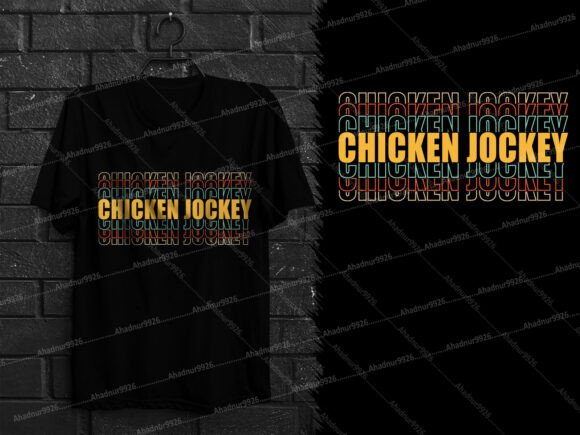
Review: Chicken Jockey Pixel Rider Blocky Shirt Design
As a designer who spends more time staring at stitch simulations than most people spend on their phones, I approach new machine embroidery design files with a healthy mix of curiosity and skepticism. When I first pulled up the CHICKEN JOCKEY PIXEL RIDER BLOCKY SHIRT graphic, my initial reaction wasn't just about the subject matter—it was about the structural integrity of the art when translated from screen to thread. This isn't your typical floral scroll or monogram; it is a bold, retro-gaming statement piece that demands specific handling to look professional in a finished product.
The mood this design creates is instantly playful and nostalgic. It taps into that 8-bit aesthetic that has remained surprisingly resilient in modern fashion. For an Etsy seller or a boutique owner, this kind of visual personality is gold because it speaks directly to a specific demographic: gamers, kids, and adults who appreciate pixel art. However, the "blocky" nature of the artwork presents unique challenges for us as embroiderers. Unlike smooth vector curves that flow easily under a needle, pixel art relies on hard edges and distinct color blocks. If the stitch density isn't managed correctly, those crisp squares can turn into a muddy mess of overlapping threads.
Real-World Application: The Sweatshirt Test
To truly evaluate the CHICKEN JOCKEY PIXEL RIDER BLOCKY SHIRT design, I imagined a specific real-life scenario: a custom order for a local gaming cafe wanting branded merchandise. They requested a run of heavy-weight cotton sweatshirts. This is a perfect use case. The thickness of sweatshirt fabric provides the necessary stability for the sharp corners inherent in pixel graphics. When you are working with a digital embroidery file that features such geometric rigidity, you need a fabric that won't distort under tension.
In this scenario, the design would sit prominently on the chest or as a large back print. The contrast between the rider and the chicken, assuming proper thread colors are selected, would pop beautifully against a heather grey or navy background. For a craft business, this translates to high perceived value. Customers love items that look like they belong in a video game world, and executing this well on a premium garment can justify a higher price point than a standard printed tee.
However, if you are considering this for a tote bag design or a canvas apron, you need to be equally mindful. Canvas has a weave that can sometimes fight against small, detailed pixels. I would recommend running a test stitch on a scrap piece of your intended canvas to ensure the "blocks" remain distinct and don't bleed into each other due to the fabric's texture.
Navigating Fabric Choices and Hoop Limitations
One of the critical aspects of using the CHICKEN JOCKEY PIXEL RIDER BLOCKY SHIRT is understanding where it might struggle. While it shines on stable materials like denim, twill, or heavy cotton, it requires caution on stretchy knits or thin polyesters. If you attempt this on a lightweight t-shirt without the right preparation, the pulling of the stitches could warp the pixelated lines, making the chicken look like it's melting.
This is where your choice of stabilizer becomes non-negotiable. For a project like this, I would strongly advise using a cut-away stabilizer rather than tear-away, especially if the finished product is meant to be washed frequently. Tear-away stabilizers can leave behind tiny fibers or fail to support the rigid structure of the blocky shapes over time, leading to puckering around the edges of the design.
Furthermore, consider the hoop size. Pixel art often looks best when it is large enough for the individual "pixels" (or stitch blocks) to be appreciated. Cramping this design into a small 4x4 hoop for a baby onesie might result in loss of detail. While baby embroidery is a lucrative niche, you must ensure the design scales down without losing its definition. If the original Graphics source is low resolution, scaling it up for a large back patch could also introduce jaggedness that embroidery cannot fix. Always check the scalability of the file before committing to a large production run.
Visual Appeal and Commercial Viability
From a branding perspective, the CHICKEN JOCKEY PIXEL RIDER BLOCKY SHIRT offers excellent potential for commercial embroidery projects. Its uniqueness helps in building brand consistency for shops that focus on geek culture or playful streetwear. When a customer sees a clean, well-executed pixel design, it signals professionalism. It tells them that the maker understands both the art style and the technical requirements of the medium.
For those creating printable mockups to sell digital assets or preview custom orders, this design is highly photogenic. The high contrast and clear shapes render well in photos, which is crucial for online listings. Whether you are selling the physical handmade product or offering it as a customization option, the visual impact is immediate. It stops the scroll on social media feeds, which is half the battle in today's market.
That said, there are areas where you must exercise judgment. Dark fabrics can be tricky if the design relies on dark thread colors for outlines. You may need to adjust the underlay or add a backing layer to prevent the garment color from showing through the gaps in the pixel grid. Similarly, if you are applying this to curved surfaces like caps, the distortion of the fabric curve can misalign the straight lines of the pixel art. In such cases, a smaller, simplified version of the design might work better than the full-scale graphic.
Practical Notes for the Professional Embroiderer
Before you load this design into your machine for a client order, here is my checklist for ensuring success with the CHICKEN JOCKEY PIXEL RIDER BLOCKY SHIRT:
- Test on Scrap First: Never skip this step. Stitch the design on the exact same fabric and stabilizer combination you plan to use for the final item. Check how the corners hold up.
- Check Thread Contrast: Ensure your thread palette provides enough separation between the rider, the chicken, and the background. Pixel art relies on color blocking; if the shades are too similar, the image will lose its form.
- Review Stitch Density: Look closely at the fill areas. If they are too dense, the fabric will pucker; if too sparse, the backing will show. Adjustments may be needed in your digitizing software if you have access to the source file.
- Verify Licensing: Since this originates from a T-Shirt Design store, confirm the license terms. Are you allowed to sell physical items made with this design? Can you resell the embroidery file itself? Clarifying this protects your small shop product line from legal issues.
- Mockup in Black and White: Convert your digital preview to grayscale. If the design loses its definition in black and white, it might lack the necessary contrast for clear stitching on certain fabrics.
Ultimately, the CHICKEN JOCKEY PIXEL RIDER BLOCKY SHIRT is a fun, versatile asset that bridges the gap between digital nostalgia and tactile craftsmanship. It fits naturally into categories like holiday embroidery for gamers, personalized gifts for birthdays, or even as a quirky element in custom apparel lines. With the right attention to fabric selection, stabilizer support, and stitch execution, it can elevate a simple garment into a standout piece. Just remember, the charm of pixel art lies in its precision; treat every stitch block with care, and your customers will appreciate the retro vibe you've brought to life.