Review: That's What I Do I Grow Stuff SVG Design
As a designer who spends more time staring at stitch simulations than actual gardens, I am always on the lookout for typography that translates well from screen to thread. When I first pulled up the That s What I Do I Grow Stuff SVG Design, my immediate reaction was one of relief. In the world of embroidery, witty text designs often fail because the lettering is too tight or the kerning creates awkward gaps once stitched out. However, this specific graphic holds a lot of promise for real-world application, particularly for those of us running small shops or looking to create high-quality personalized gifts.
First Impressions and Visual Personality
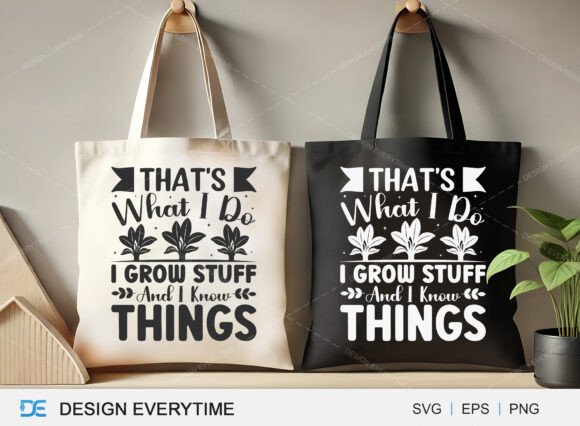
The mood of this design is effortlessly casual yet confident. It taps into that popular "plant parent" culture without feeling overly trendy or dated. The layout is clean, relying on strong, readable fonts that suggest a modern farmhouse aesthetic. For an embroidery project, this is crucial. You do not want your customer squinting to read a slogan on a tote bag. The separation between the black and white versions provided in the package allows for immediate versatility. Whether you are working on a dark navy sweatshirt or a crisp white apron, having these distinct options saves you from having to manually invert colors and risk losing detail in the process.
From a visual standpoint, the design feels balanced. It is not cluttered with unnecessary flourishes that would turn into a bird's nest of thread under the needle. This simplicity is what makes it a strong candidate for both hobbyists and professional Etsy sellers. It speaks to a lifestyle—gardening, growing, knowing things—which resonates deeply with a specific demographic of buyers who value handmade authenticity.
Real-World Application: The Custom Tote Scenario
To truly test the viability of this file, I imagined a specific client request: a custom embroidered tote bag for a local botanical shop's grand opening. They wanted something that staff could wear or sell as merchandise. The That s What I Do I Grow Stuff SVG Design fits this brief perfectly.
If I were stitching this onto a canvas tote, I would lean towards a dense fill stitch for the letters to ensure durability against frequent use. The design's structure supports this well; the letters are substantial enough to hold a satin stitch or a tight fill without collapsing. For a tote bag design, placement is key. Centered on the front panel, this graphic becomes a statement piece. It tells a story about the user before they even speak. If the shop owner wanted to elevate the product, we could even adapt this into an embroidered patch by adding a border in the digitizing software, then sewing that patch onto the bag for a textured, layered look.
Beyond totes, this design shines on custom apparel. Imagine a relaxed-fit crewneck sweatshirt in heather grey. The contrast of white thread against the grey fabric, using the white version of the file, would pop beautifully. It transforms a basic garment into a handmade product with personality. For baby embroidery, scaling this down for a onesie is also a viable option, provided the lettering remains legible at a smaller scale. Parents love gear that hints at their child's future hobbies, and "growing stuff" is a wholesome, adorable theme for a nursery.
Technical Considerations for Stitching
While the vector files (SVG and EPS) are excellent for cutting machines and print, using them for machine embroidery requires a crucial intermediate step: digitizing. Unless you have a pre-digitized embroidery file version of this specific graphic, you cannot simply load an SVG into your machine and expect perfect results. You must convert these graphics into a stitch file compatible with your machine.
When digitizing That s What I Do I Grow Stuff SVG Design, pay close attention to the stitch density. If the letters are too close together, the threads might bridge or break. I recommend testing the design on scrap fabric first. This is non-negotiable. Check how the stabilizer interacts with your chosen material. For stretchy fabrics like t-shirts, a cut-away stabilizer is essential to prevent the design from puckering over time. For woven fabrics like linen tea towels or aprons, a tear-away might suffice, but always err on the side of stability for text-heavy designs.
There are specific scenarios where caution is required. If you plan to embroider this on a cap, remember that the curved surface distorts the design. You may need to adjust the pull compensation in your digitizing software. Similarly, be wary of using this on textured fabrics like heavy wool or looped towels; the texture can swallow up finer details, making the text harder to read. Always inspect small details and sharp corners. If the original graphic has very thin serifs, they might need to be thickened slightly in the digitizing phase to ensure they stitch out cleanly with a satin stitch or running stitch.
Commercial Viability and Brand Consistency
For craft business owners, consistency is king. This design offers a level of professionalism that builds customer trust. When a buyer sees crisp, well-executed lettering, they perceive higher value. It moves the item from a "craft fair find" to a "boutique product." The availability of high-resolution PNGs (4500px) alongside the vector files is a massive bonus for creating printable mockups. You can showcase your finished embroidery on digital storefronts without needing to photograph every single color variation immediately.
However, before listing this as a small shop product or including it in a bundle of design assets, you must verify the licensing terms. The product description mentions file formats but does not explicitly detail the commercial license scope. Always confirm whether you are allowed to sell the physical finished items, such as holiday embroidery gifts or wedding favors, or if there are restrictions on the number of units. Protecting your business means respecting intellectual property rights.
Final Verdict for Makers
The That s What I Do I Grow Stuff SVG Design is a robust, versatile graphic that holds up well under the scrutiny of practical design judgment. It avoids the pitfalls of overly complex illustrations that frustrate embroiderers. Instead, it offers a clean slate for creativity. Whether you are creating a personalized gift for a green-thumbed friend or stocking inventory for your online store, this design provides a solid foundation.
My advice is to treat the vector files as your starting point, not your finish line. Invest time in proper digitizing, choose your thread colors wisely to maximize contrast against your fabric texture, and always run a test stitch. When executed with care, this design elevates simple materials into cherished keepsakes. It captures a sentiment that many of us feel: that there is wisdom and joy in nurturing life, one stitch and one plant at a time.